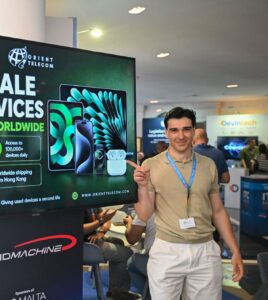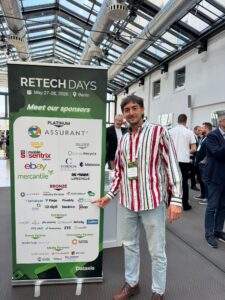

From Hong Kong, parts of the European used mobile market can still look unclear. For us at Orient Telecom Limited, Europe has been one of our key markets for more than 10 years, so staying close to its changes is important if we want to serve our clients better and keep our market understanding sharp.
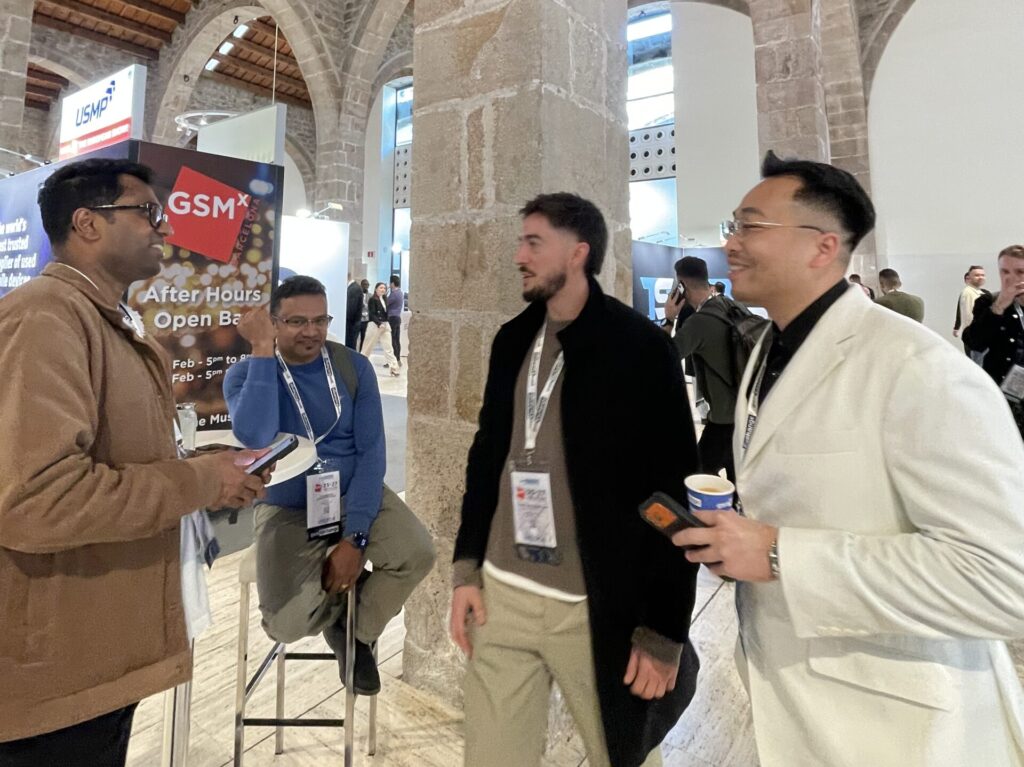
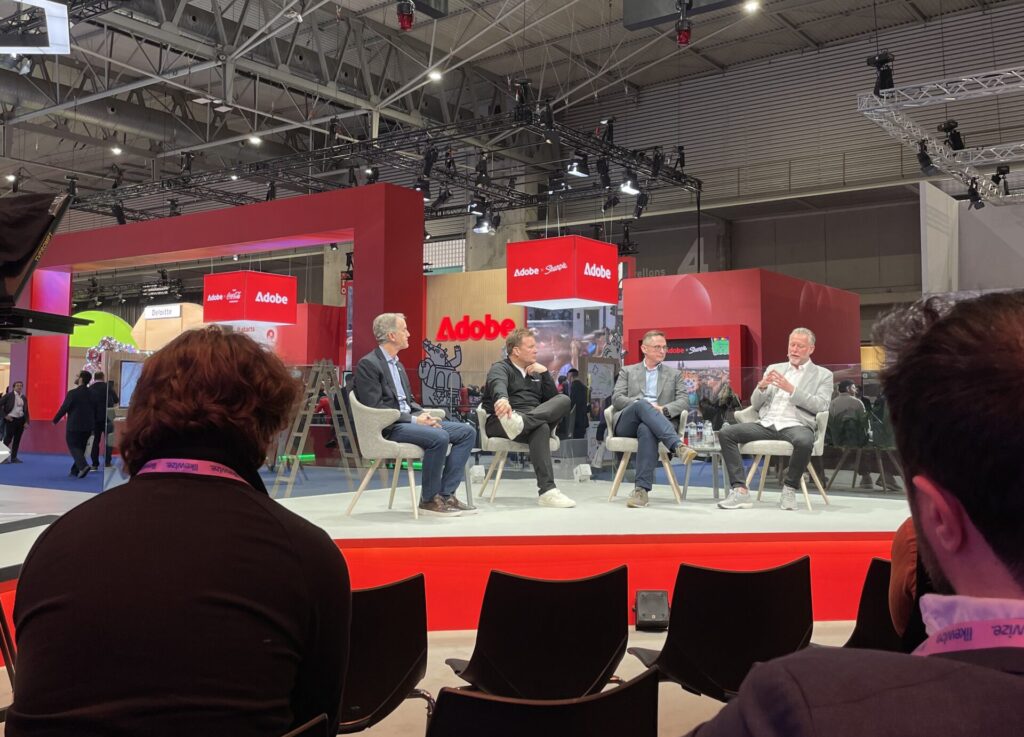
That is why our team attended gsmX and MWC Barcelona this year, with our Sales Director David He also joining from Hong Kong.
These two events gave us a clearer view of what is happening inside Europe’s secondary mobile market, especially around used Apple devices, used iPhones, refurbished iPhones, and the wider pressure on how companies compete today.
In this article, we break down some of the clearest signals now shaping the EU secondary mobile market, and why they matter for anyone doing business with companies across Europe.
What’s concerning the used iPhone market in the EU
One of the first things that became clear is that Margin VAT remains a sensitive issue and still affects pricing pressure across the market. Even when it is not discussed openly in every conversation, it continues to shape how companies price, compare, and compete. More precisely, the uncertainty around this topic has pushed some EU-based distributors to slow down or even stop importing Apple devices from outside Europe and rely more heavily on local supply.
As one European company representative from told us during gsmX:
“The uncertainty around the Margin VAT topic made us cancel our imports from outside Europe, and now we only deal with EU-based entities.”
Another strong signal we saw was that many European companies are moving beyond pure trading. More and more businesses are building around the stock itself by adding trade-in services, repairs, refurbishment, logistics, and finance support. In other words, simple buy-and-sell is no longer the only game on the table. This is mainly happening because competition in the used phone wholesale market keeps rising, so the simple trading model is losing some of its strength and pushing companies to find new ways to stay competitive.
We also saw that, on the supply side, EU-spec iPhones and EU-spec iPads remain the most demanded, but supply is still limited. A large part of these devices stays within Europe, which means competition around the same stock remains high and access is not always easy.
Because of these supply complications, many European companies are moving more toward Apple-direct categories such as CPO and AS IS, where quality is often more stable and predictable, closer to Brand NEW stock, and the risks usually linked to sourcing outside Europe can be reduced. This stock is limited as well, which is one of the reasons suppliers like Orient Telecom remain valuable for EU partners, as we can support this demand with strong availability, larger volumes, and access to harder-to-find models.
And finally, one thing felt stronger than before: brand and reputation matter more than ever. This point connects closely with everything mentioned above. In a market this crowded, companies focused only on trading stock are more exposed. One-time trades and fast deals are simply not as compelling as they used to be. Trust, consistency, visibility, and strong service are starting to carry much more weight.
“Europe is still one of the most important markets for used Apple devices, but the market is changing fast. Today, buyers are not only comparing price lists. They are comparing reliability, grading consistency, speed, and how much support a supplier can really give after the deal is done.”
— David He, Sales Director, Orient Telecom
What these signals mean for the global used phone market
Taken together, these signals show that what used to be a more straightforward day-to-day trading business is becoming far more complex.
The secondary mobile market in Europe is no longer only about buying and selling stock. It is becoming more service-driven, more layered, and more competitive. Companies building wider systems around their business are becoming harder to compete against with price alone.
At the same time, supply is much larger than before and continues to grow each year. But stronger competition has pushed margins down sharply.
The math has clearly changed. What used to be 1,000 devices at $30 to $50 margin per unit is now, in many cases, 50,000 to 100,000+ devices at under $5 each.
That changes everything. It transforms how risk is managed, how fast deals need to move, and what kind of company can still stay competitive in the used iPhone and refurbished iPhone wholesale space.
What the European used phone market now demands from suppliers
What gsmX and MWC Barcelona made clear is that Europe’s used mobile market is still active, but it is becoming more demanding and more structured. Hong Kong sourcing remains an important part of that picture because it still influences supply flow, pricing pressure, model availability, and competition around key categories in Europe.
Even though many European markets are trying to stay more self-sufficient, the supply of used Apple products inside Europe is still not enough to fully meet demand. Because of that, markets such as Hong Kong remain an important sourcing destination for European distributors, traders, and retailers looking for broader availability and stronger price opportunities.
That is exactly why the Orient Telecom team stays present at major industry events: to follow the market closely, understand where it is moving, and bring back the most up-to-date information to serve our clients better and help our partners grow.
Industry events have been one of the most effective channels in our space for years. Whether you sell used and refurbished iPhones, trade Brand NEW and CPO stock, or build tools and services around this market, you’ve probably been invited to these conferences before. They stay popular for one reason: it works. Face-to-face meetings are still the fastest way to build trust and move business forward.
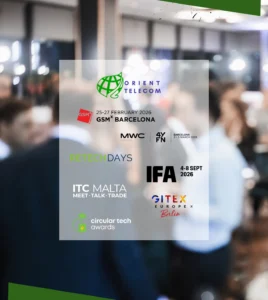
This year Europe has no shortage of conferences. These are the events we at Orient Telecom consider the most useful and inspiring for our goals in 2026: meeting serious buyers, tracking supply-and-demand signals, and building relationships that turn into repeat business.